2026-08-31 · Marco Aroso
Why the Massachusetts Plumbing Code Is Stricter Than Most People Expect
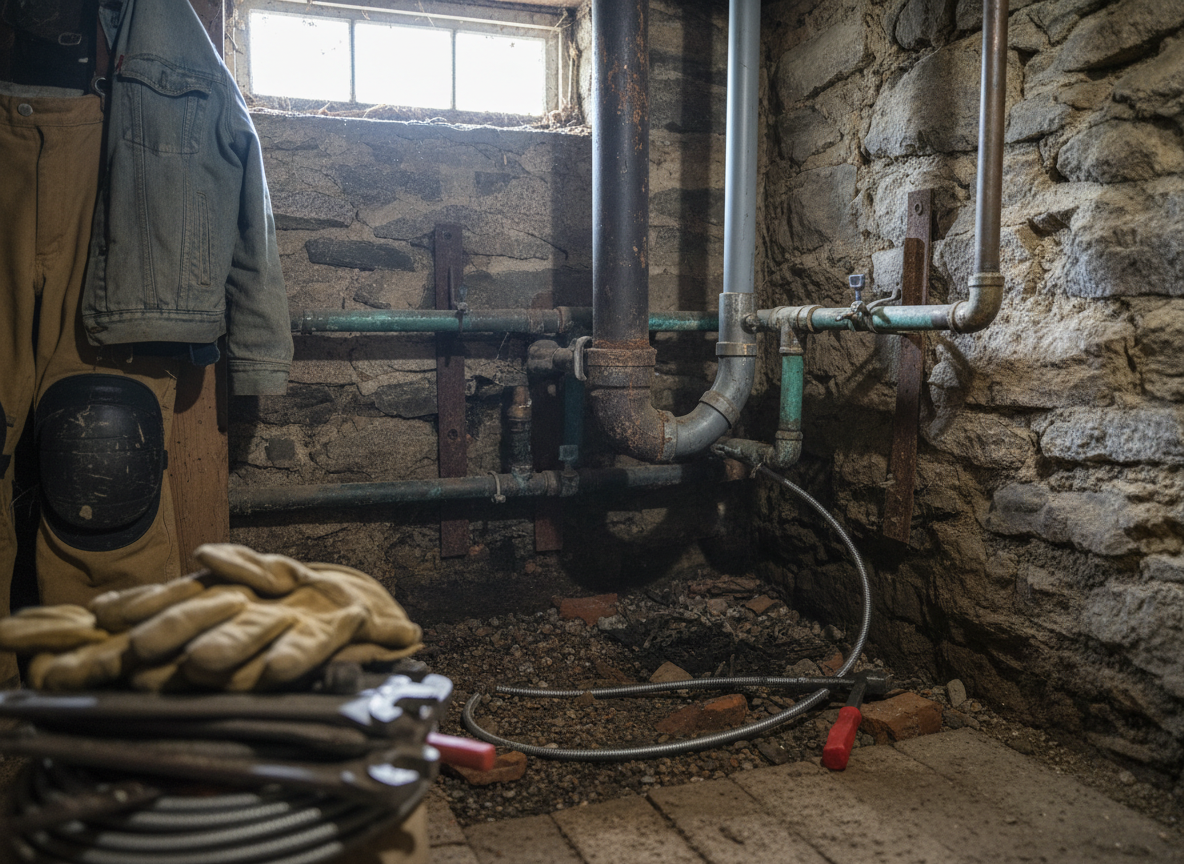
Massachusetts plumbing code requires additional freeze protection, specific venting standards, and enhanced backflow prevention that exceed basic national minimums. These rules address the state's humid continental climate with prolonged sub-freezing periods and the prevalence of pre-1950 housing stock across Essex County communities such as Downtown Lawrence, Tower Hill, and Prospect Hill.
Cold Winters Drive Freeze Protection Rules
Lawrence experiences extended stretches below freezing each winter that force pipes in unheated basements and exterior walls to be treated differently than in milder climates. Code mandates insulation on all exposed supply lines plus heat tape options on vulnerable runs near Lawrence Heritage State Park properties where historic construction leaves little room for modern rerouting. Plumbers working Tower Hill and Prospect Hill routinely install these measures on 40- to 60-year-old copper and galvanized lines that sit closer to exterior walls than newer builds allow. Failure to follow these details leads to repeated bursts once temperatures drop, especially on streets with poor drainage that keep soil saturated longer. The same winter conditions affect nearby Methuen and Andover homes, where similar stock requires identical precautions.
Older Housing Stock Shapes Material and Venting Standards
Many Lawrence homes built during the mill era contain Orangeburg or clay sewer lines that the code now treats with stricter replacement triggers than newer subdivisions. Orangeburg and Clay Sewer Pipe: What Is Under Older Streets and What Replaces It details how these materials fail under modern flow demands and why Massachusetts requires camera inspections before any repair permit is issued. Venting rules also tighten in two- and three-family homes common to the Mill District and Mount Vernon because shared stacks must handle simultaneous use without negative pressure that siphons traps. Residential Plumbing work in these buildings therefore includes additional vent extensions that single-family codes in other states often omit.
Backflow Prevention in Dense Urban Areas
Essex County density around Essex Art Center and Downtown Lawrence means more properties sit on combined sewer systems that increase cross-connection risks during heavy spring rains. Code therefore requires testable backflow devices on all new or replaced water services, a step many states reserve only for commercial accounts. Homeowners replacing water heaters or adding irrigation near South Lawrence East frequently discover these devices must be installed even on ¾-inch residential lines. The rule prevents contaminated water from entering the municipal supply when pressure drops occur during cold-weather main breaks common in the region.
Thermal Expansion and Closed-System Requirements
Once a water heater is replaced in a Lawrence home with newer low-flow fixtures, the system becomes closed and thermal expansion must be managed. Thermal Expansion Tanks: Why a Closed System Needs One and What Happens Without It explains the pressure spikes that occur when 40- to 50-gallon tanks heat water without an expansion tank. Massachusetts code enforces this on every replacement to protect older piping that cannot handle repeated 80-psi surges. Installations in Prospect Hill and Arlington District routinely include these tanks because the original galvanized lines already show stress cracks from decades of pressure cycling.
Sump Pump and Drainage Rules for Local Terrain
Lawrence's low-lying sections near the Merrimack require sump pumps with battery backup on any below-grade living space. Sump Pump installations must discharge to daylight or approved dry wells rather than sanitary sewers to avoid overloading combined systems during winter thaws. Code inspectors check these details on every permit because frozen discharge lines in sub-zero temperatures create ice dams that force water back into foundations. Homes in Colonial Heights and South Lawrence West see these requirements most often due to the clay-heavy soil that holds water longer after snowmelt.