2026-08-31 · Marco Aroso
Lead Service Lines in Older Massachusetts Cities and How Replacement Actually Works
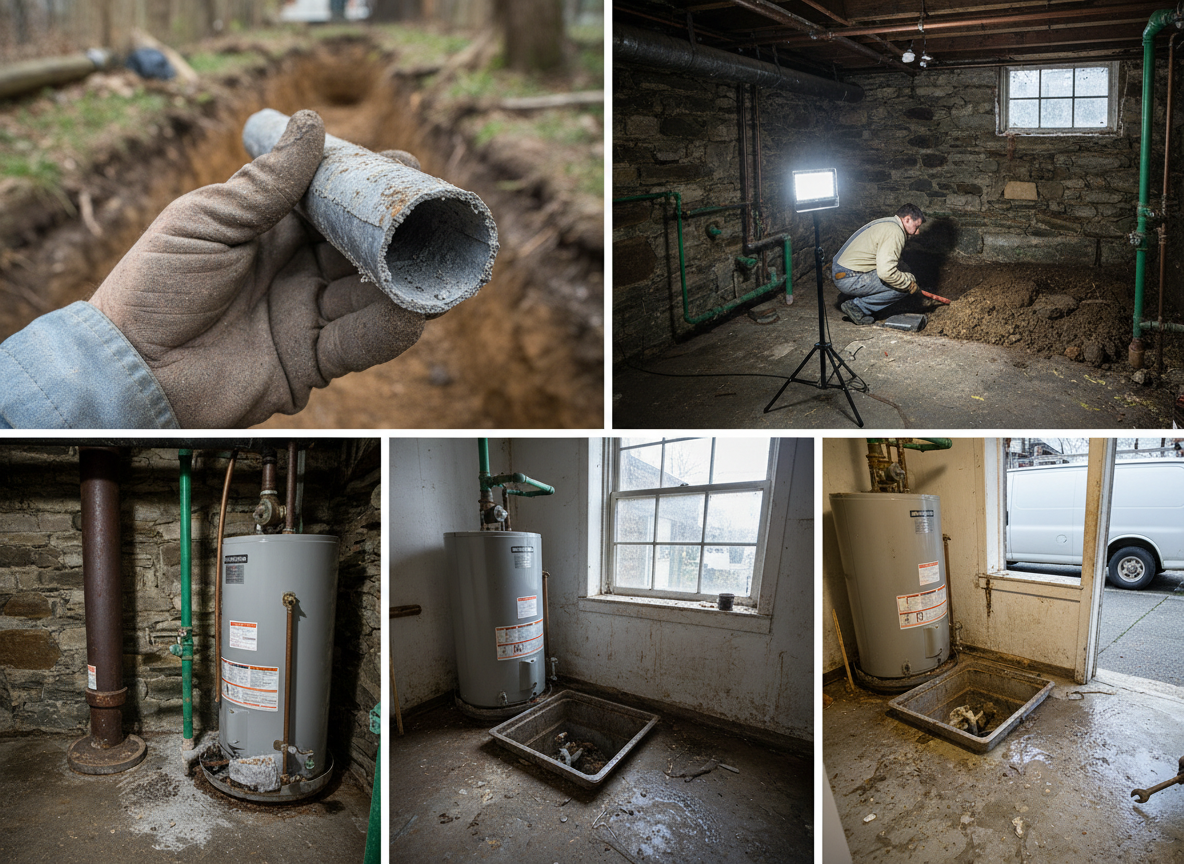
Lead service line replacement in older Essex County cities such as Lawrence starts with locating the line, securing permits, and excavating from the city main to the foundation, usually completing in one to three days when no complications arise. The work requires shutting off water at the curb stop, cutting out the lead pipe, installing new copper or plastic line, and restoring the trench. Homeowners in neighborhoods with pre-1950 housing stock face higher chances of encountering lead because many lines were installed before federal rules banned the material.
Understanding Lead Service Lines in Older Massachusetts Cities
Lawrence contains thousands of homes built between 1880 and 1940 in Downtown Lawrence, Tower Hill, and Prospect Hill where galvanized or lead lines still connect to the water main. These lines range from three-quarters of an inch to one inch in diameter and often sit three to six feet deep. Essex County soil mixes clay and fill that holds moisture, accelerating corrosion once the protective scale inside the pipe breaks down. Nearby Methuen and Andover share the same humid continental climate, so freeze-thaw cycles each winter push ground movement that can crack older lead joints. Property records and a simple scratch test on exposed pipe usually confirm the material before any digging begins.
How Lead Service Line Replacement Works
The process begins with a site visit to trace the line route using electronic locators and probe holes. Once the path is marked, a small excavator opens a trench from the street main to the house, typically four to eight feet deep. The old lead pipe is removed in sections, the new line is laid with proper bedding, and connections are made using compression fittings or soldered joints rated for potable water. Backfill uses select material compacted in lifts to prevent settling. Restoration includes replacing sidewalk or lawn sections disturbed during the dig. Sewer Line Repair and Replacement crews often coordinate when both lines need attention in the same trench.
Local Realities in Lawrence and Nearby Areas
In Tower Hill and Prospect Hill the terrain slopes toward the Merrimack River, so trenches can hit groundwater at four feet, requiring pumps during replacement. Downtown Lawrence blocks often have narrow rights-of-way and overhead utilities that limit machine access, forcing more hand digging. Cold winters mean crews schedule around frozen ground from December through March, when frost depths reach two feet or more. Excavation crews in these neighborhoods carry extra shoring and dewatering equipment because clay soils collapse when saturated. Property owners in adjacent Andover and Methuen face similar conditions but encounter fewer combined sewer overflows that complicate permitting in Lawrence.
Post-Replacement Considerations
After the new line is installed, water is flushed at high volume for several minutes to clear sediment. Homeowners receive instructions to run taps for a set time each day during the first week. Who Owns the Sewer Lateral and Who Owns the Water Service Line explains responsibility splits between the city and the property owner at the curb stop. Follow-up water testing confirms lead levels drop below action thresholds. In multifamily buildings on North Common or the Mill District, coordination with other units prevents pressure issues during the shutdown. Proper documentation of the new line material helps future resale inspections.