2026-08-31 · Marco Aroso
Galvanized Supply Pipe: Why Water Pressure Drops in a 100 Year Old House
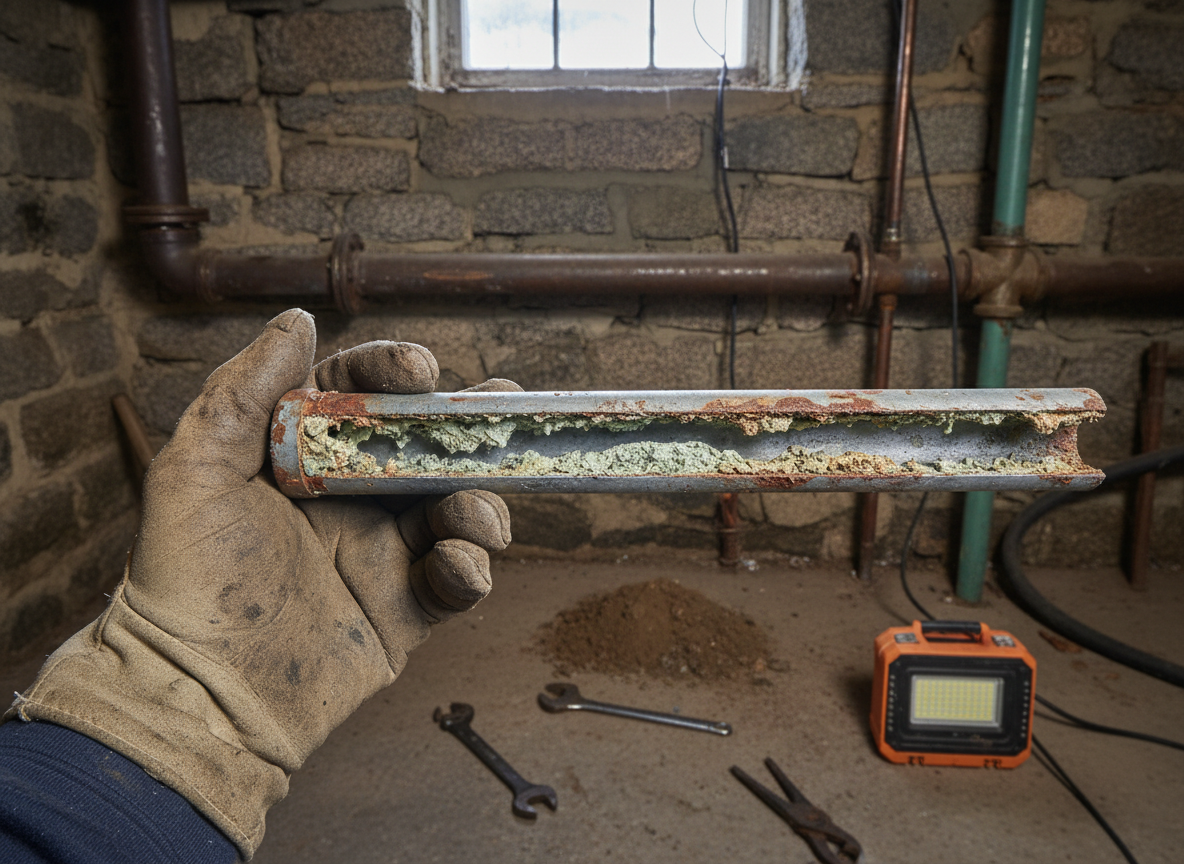
In 100-year-old houses across Lawrence, galvanized supply pipes lose water pressure once internal rust and mineral scale reduce the effective diameter by 40-60 percent, typically after 40-60 years of service. This narrowing happens because the zinc coating eventually fails and the underlying steel corrodes, leaving flakes and scale that restrict flow from the main to fixtures.
Corrosion Buildup Inside Galvanized Supply Lines
Galvanized pipe installed before the 1960s carries water through a steel tube coated with zinc. Over decades the coating dissolves, exposing steel that reacts with dissolved oxygen and minerals in the supply. Rust tubers form on the interior wall, then break loose and collect at elbows or valves. The result is a gradual reduction in cross-section that homeowners notice first at upstairs showers or hose bibs farthest from the meter. In Lawrence homes built between 1900 and 1925, original 3/4-inch lines often measure less than 1/2 inch inside after 50 years. Cold winters add stress when pipes expand and contract, loosening scale that then lodges downstream. The same process appears in Tower Hill and Prospect Hill blocks where many triple-deckers still retain the original galvanized runs.
Local Water Conditions and Winter Cycles in Essex County
Lawrence sits in a humid continental climate where winter temperatures regularly drop below freezing. Municipal water carries moderate hardness that leaves calcium deposits inside pipe once the zinc layer is gone. Freeze-thaw cycles in unheated basements or crawl spaces crack loose rust scale that travels to fixtures. Homes near the Merrimack River or in the Mill District often see faster buildup because older mains deliver water with slightly higher sediment loads. These seasonal patterns mean pressure complaints spike every November through March when residents run more hot water and notice weak flow at kitchen sinks and second-floor baths.
How to Confirm Galvanized Pipe Is the Cause
Start by checking the age of the house and looking for threaded steel pipe at the water heater or main shutoff. If the pipe shows surface rust or you can hear flow noise that stops when a downstream valve is closed, the line is likely restricted. A plumber can cut a small section or use a borescope to measure remaining opening. Compare pressure at the hose bib nearest the street with pressure at an upstairs fixture; a drop greater than 15 psi points to interior restriction rather than a meter or street issue. In Downtown Lawrence and Prospect Hill, many 1920s homes still have the original 1/2-inch or 3/4-inch galvanized laterals that were never replaced during past renovations.
Replacement Choices for 100-Year-Old Lawrence Houses
Full repipe with copper or PEX restores pressure by returning the line to full diameter. In many Tower Hill and Arlington District properties, crews run new lines through the basement or attic to avoid disturbing plaster walls. Partial replacement at the worst sections can help when budget is tight, but the remaining galvanized segments continue to corrode. Homeowners in South Lawrence East often combine this work with residential plumbing upgrades that include new shutoffs and a pressure-reducing valve. The lead service lines article explains how Massachusetts rules affect older galvanized systems that may contain lead joints. Proper diagnosis prevents unnecessary excavation when the restriction is actually at the meter or curb stop.
Preventing Further Pressure Loss After Repair
Once new supply lines are installed, keep strainers clean at fixtures and avoid running water through old galvanized sections still feeding outdoor spigots. Annual checks of the main shutoff and water heater inlet help catch early scale before it travels. In neighborhoods like North Common and Mount Vernon, where many homes share the same 1920s infrastructure, neighbors often schedule coordinated repipes to reduce mobilization costs. Consistent maintenance and timely material upgrades keep pressure stable through the cold Essex County winters.