2026-08-31 · Marco Aroso
Tree Roots in the Sewer Line: How They Get In and What Actually Stops Them
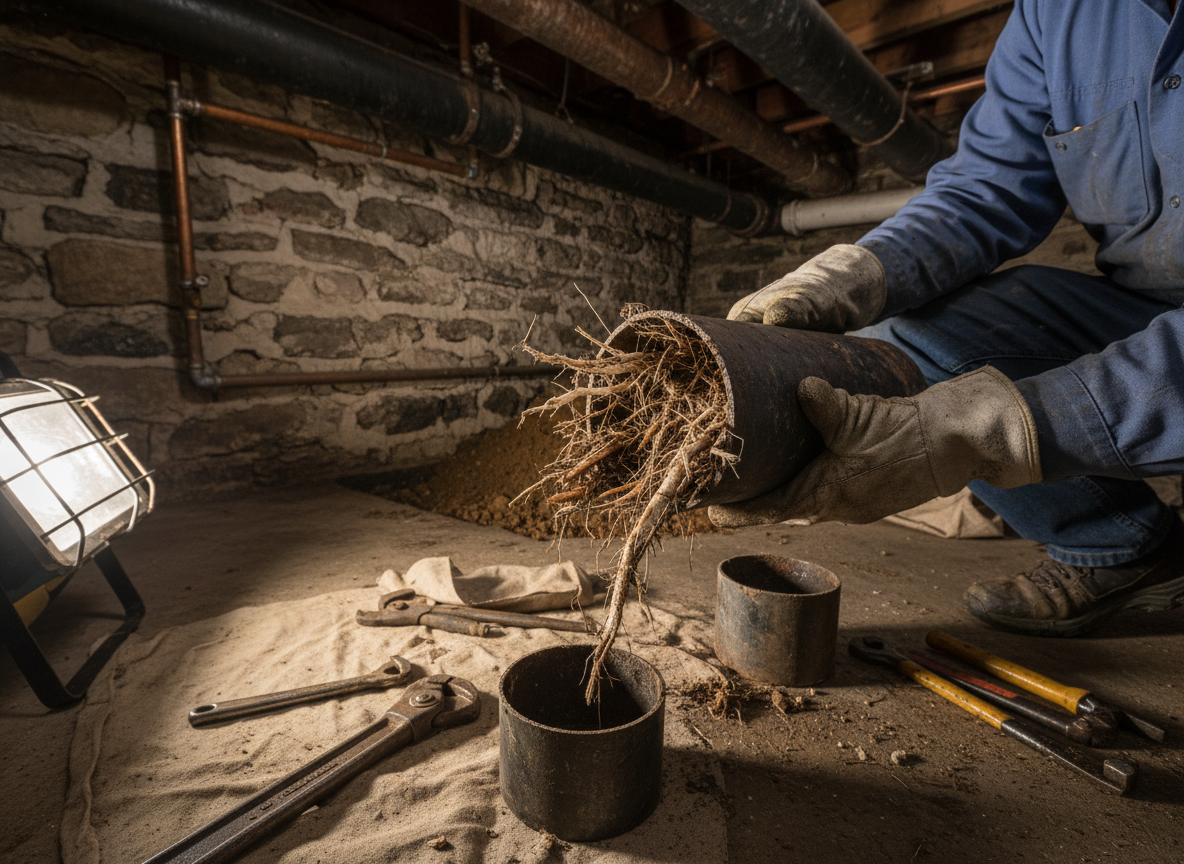
Tree roots enter sewer lines in Lawrence through tiny joints and cracks in older pipes, and hydro jetting combined with targeted section repairs stops them for 5–10 years in most Essex County homes. The process begins when roots seek moisture near the pipe, then expand inside once they penetrate. Local conditions in neighborhoods like Downtown Lawrence and Tower Hill speed this up because many homes still have clay or cast-iron lines laid decades ago. Cold winters push roots deeper in search of water while freeze-thaw cycles widen existing gaps. Homeowners in Prospect Hill and nearby Methuen often notice slow drains first, followed by backups after heavy rain.
How Roots Locate and Penetrate Pipes
Lawrence's humid continental climate keeps soil moist enough for roots to grow aggressively toward sewer lines even in winter. Older homes in Tower Hill and the Mill District commonly have 4-inch or 6-inch clay pipes with mortar joints that shift over time. Once a hairline crack forms from settling or frost heave, fine root hairs enter within one growing season. By the second or third year those roots can fill the pipe enough to reduce flow by half. Andover properties on the edge of town show the same pattern when maples or oaks sit within 15–20 feet of the main line. The ground here is a mix of clay and fill that holds water against the pipe, giving roots a steady signal to follow.
Practical Steps That Actually Remove and Block Roots
Hydro jetting at 3,500–4,000 psi cuts roots cleanly without chemicals and restores full flow in a single visit for most Lawrence homes. After clearing, a follow-up camera inspection shows whether the pipe wall needs lining or spot replacement. In areas with repeated root problems, such as South Lawrence East, crews often install a 10–15 foot section of new PVC or HDPE pipe to eliminate the old joint entirely. Root barriers placed 2–3 feet from the line work only when combined with these mechanical fixes; standalone chemicals rarely last past one season. Residents near Lawrence Heritage State Park benefit from the same approach because the park's mature trees send roots toward nearby residential mains. Hydro Jetting paired with Sewer Line Repair and Replacement gives the longest interval before roots return.
Why Older Lawrence Pipes Are Especially Vulnerable
Many streets in Prospect Hill and Downtown Lawrence still contain the original clay or Orangeburg lines installed before 1970. These materials develop longitudinal cracks that roots exploit quickly once nearby trees mature. The county's freeze-thaw cycles open joints further each spring, allowing even small roots to reach the flow line. Properties within two blocks of Essex Art Center often share this issue because the dense tree canopy was planted at the same time as the homes. A single mature silver maple can send roots 30–40 feet laterally, reaching the sewer trench in one or two summers. Orangeburg and Clay Sewer Pipe: What Is Under Older Streets and What Replaces It explains the exact replacement options used on these blocks.
Long-Term Prevention That Matches Local Conditions
After the initial clearing, annual camera checks every 18–24 months catch new root growth before it blocks the line again. Homeowners in Tower Hill and Colonial Heights who replace the entire run from house to street see 12–15 years without recurrence when the new pipe is properly bedded. Planting only shallow-rooted shrubs within 10 feet of the sewer path reduces future pressure. In winter, the cold ground slows root growth, giving crews a clear window for excavation work without heavy foliage interference. Drain Cleaning scheduled before leaf drop removes any early root fragments that survived jetting. These steps, applied consistently, keep Lawrence homes flowing through the next freeze-thaw cycle.