2026-08-31 · Marco Aroso
Thermal Expansion Tanks: Why a Closed System Needs One and What Happens Without It
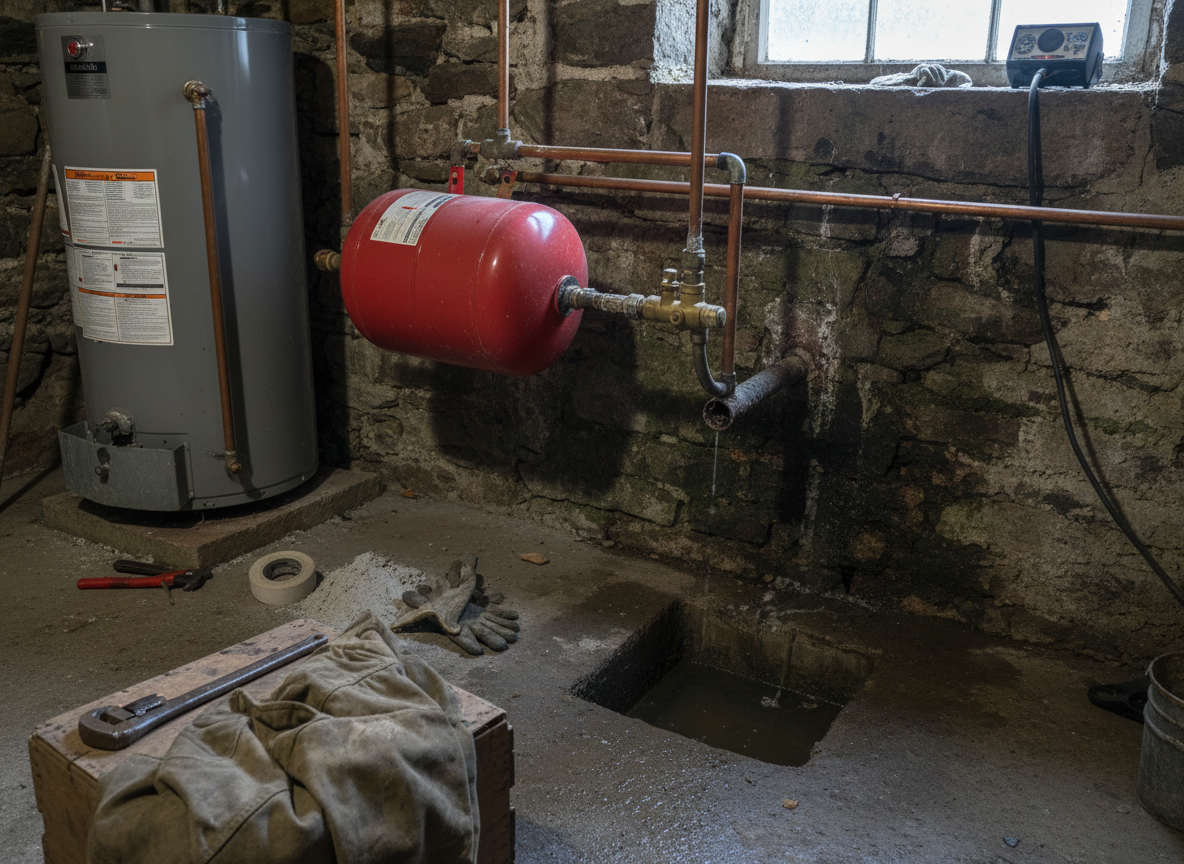
In a closed plumbing system, water expands when heated and has nowhere to go, raising pressure by 50–100 PSI or more as temperatures climb from 50°F to 140°F. Without a thermal expansion tank the excess force stresses pipes, joints, and fixtures until something gives. Lawrence homes in Tower Hill and Prospect Hill commonly run closed systems because backflow preventers required by Massachusetts code block water from returning to the city main.
What Creates a Closed System in Lawrence Homes
Many older houses in Downtown Lawrence and the Mill District received backflow devices or check valves during renovations to meet Essex County standards. These valves turn an otherwise open system into a closed loop. When residents in nearby Methuen or Andover neighborhoods add the same protection, the same pressure issue appears. Cold winters here drive higher water-heater use, so expansion happens daily from November through March.
How Thermal Expansion Tanks Work
A thermal expansion tank contains a bladder separating air from a small reservoir of water. As pressure rises the bladder compresses and absorbs the extra volume before it reaches 80 PSI. Tanks sized for 40- to 80-gallon heaters typically measure 2–5 gallons and install on the cold-water line above the heater. Proper pre-charge pressure matches the home’s static pressure, usually 40–60 PSI in Lawrence’s older stock.
What Happens Without an Expansion Tank
Pressure climbs until the temperature-and-pressure relief valve opens, dumping hot water onto floors or into drains. Repeated discharge shortens valve life and can erode the heater’s glass lining. In severe cases copper joints in Prospect Hill basements separate or PEX fittings leak behind walls. Homeowners then face water damage restoration calls after a single cold snap when everyone runs showers and dishwashers at once.
Local Factors That Increase Risk
Lawrence’s humid continental climate produces rapid temperature swings that force water heaters to cycle more often. Homes built before 1970 often have galvanized or copper lines that tolerate less pressure fluctuation than modern materials. Properties near the Essex Art Center and Lawrence Heritage State Park sit on older municipal mains where pressure already runs higher, leaving less margin before fixtures fail.
See the article Why the Massachusetts Plumbing Code Is Stricter Than Most People Expect for code details that affect closed systems here. For water heater questions visit our Water Heater Repair page or the related post on Backflow Prevention and Cross Connection Testing Requirements in Massachusetts.
Checking and Adding a Tank
Start by confirming the system is closed: turn off the main valve and open a hot faucet; if flow stops immediately a check valve or backflow device is present. Measure static pressure at an outdoor spigot, then size the tank accordingly. Installation takes one to two hours on most residential lines and can be done without shutting off service to the whole house. A 24-hour plumber at 45 Beacon Ave can perform the work any day of the week.