2026-08-31 · Marco Aroso
Sump Pumps, Check Valves and Backwater Valves: What Keeps a Basement Dry
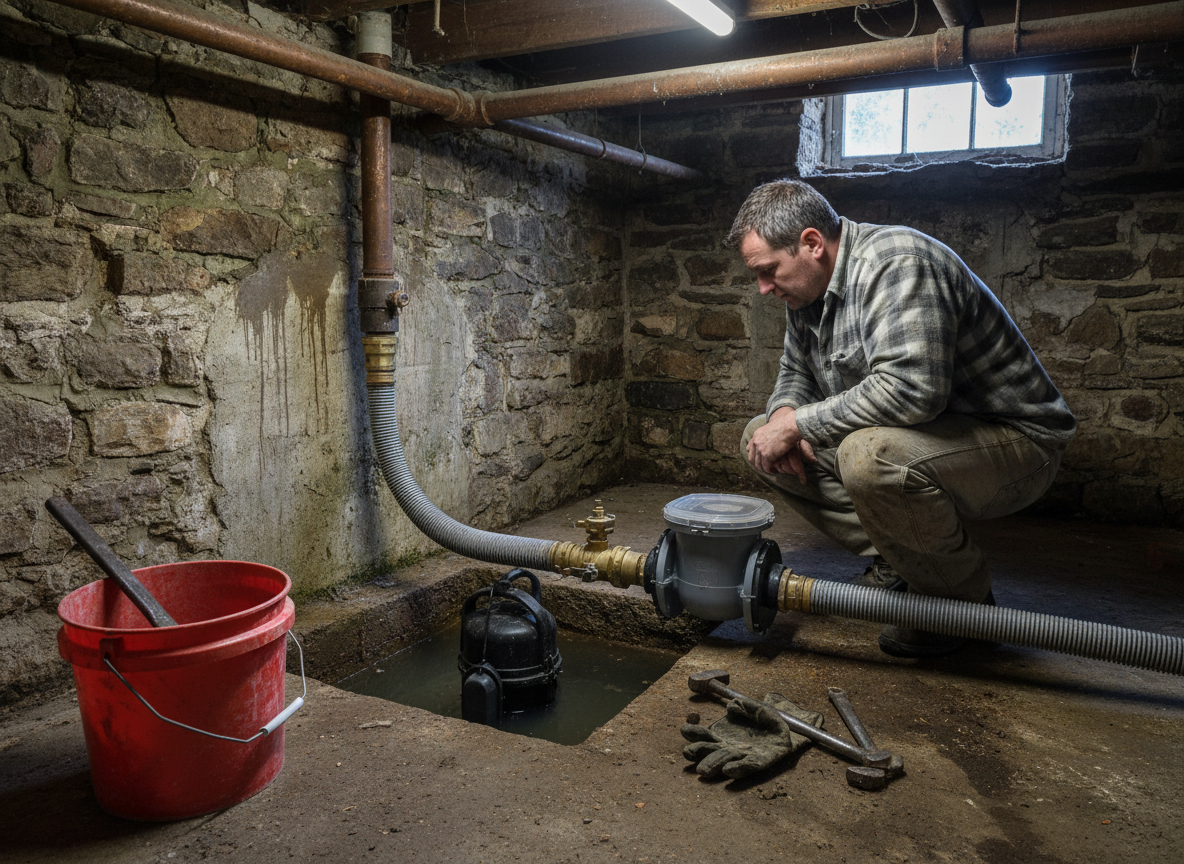
Sump pumps with properly installed check valves and backwater valves keep basements dry by automatically removing groundwater before it rises above the slab and by preventing reverse flow during heavy rain or snowmelt. In Lawrence homes built before 1950, these systems typically activate 4–8 times per week once winter temperatures drop below freezing and spring thaw begins.
Sump Pump Operation in Lawrence's Climate
Lawrence sits in a humid continental climate where cold winters bring repeated freeze-thaw cycles that push water through foundation cracks in older brick and stone basements found throughout Tower Hill and Prospect Hill. A 1/3-horsepower sump pump with a 1.5-inch discharge line moves 2,000–3,000 gallons per hour, enough for the typical 20–30 gallon inflows that occur after a 2-inch rain on saturated Essex County soil. The pump sits in a 18–24 inch diameter basin set 2 feet below the slab so it catches water before it reaches finished floors. During January thaws, when snowmelt from roofs and yards enters the ground, the float switch cycles the pump every 3–5 minutes until the water table drops. Without a functioning pump, water reaches the slab within 4–6 hours of sustained inflow in these neighborhoods.
Role of Check Valves on Discharge Lines
A check valve installed on the discharge pipe stops water from flowing backward into the basin once the pump shuts off. In Lawrence homes with 8–12 foot deep basements, this reverse flow can add 10–15 gallons per cycle and shorten pump life from the normal 8–12 years to 3–5 years. The valve must be placed 12–18 inches above the basin cover and oriented vertically to avoid debris buildup common in older city water mains. When replacing a failed check valve, plumbers cut the PVC line 6 inches above the old fitting and solvent-weld a new 1.5-inch swing or spring-loaded model rated for 150 psi. Homeowners in Downtown Lawrence notice the difference immediately: the pump runs fewer cycles and the basin stays empty between storms.
Backwater Valves for Sewer Backup Protection
Backwater valves block sewage from city mains from entering the home during heavy rain when the Merrimack River system is overwhelmed. In Prospect Hill and Tower Hill properties connected to the 1890s combined sewer lines, these valves are required on any new or replaced drain line. The valve installs in a 24-inch access pit outside the foundation and uses a flap that closes when flow reverses. Annual testing involves running a garden hose into the cleanout and confirming the flap seals within 2 seconds. Without this valve, a single 3-inch main backup can push 50–80 gallons of wastewater into the basement laundry area before the city crew clears the line.
Common Failures and Seasonal Maintenance
The most frequent issues in Essex County homes are stuck floats from iron sediment, frozen discharge lines above grade, and debris lodged in check valves after spring runoff. Homeowners should test the pump monthly by pouring 5 gallons of water into the basin and listening for the motor to start within 10 seconds. In winter, the discharge line must route to a frost-proof location at least 10 feet from the foundation to prevent ice dams that force water back into the house. Properties near the Essex Art Center and Lawrence Heritage State Park often share the same 1920s-era foundations that require these three components working together rather than any single device.
For homes in Downtown Lawrence or adjacent streets in Methuen and Andover that experience repeated wet basements, the combination of a correctly sized sump pump, vertical check valve, and exterior backwater valve stops water at the source before it damages finishes or promotes mold. Sump pump service addresses the full assembly rather than isolated parts. When water has already entered living spaces, water damage restoration crews coordinate with plumbers to dry the slab and prevent secondary issues in older plaster walls typical of the area.