2026-08-31 · Marco Aroso
Shared Stacks in Multifamily Buildings: Why One Unit's Clog Backs Up Into Another
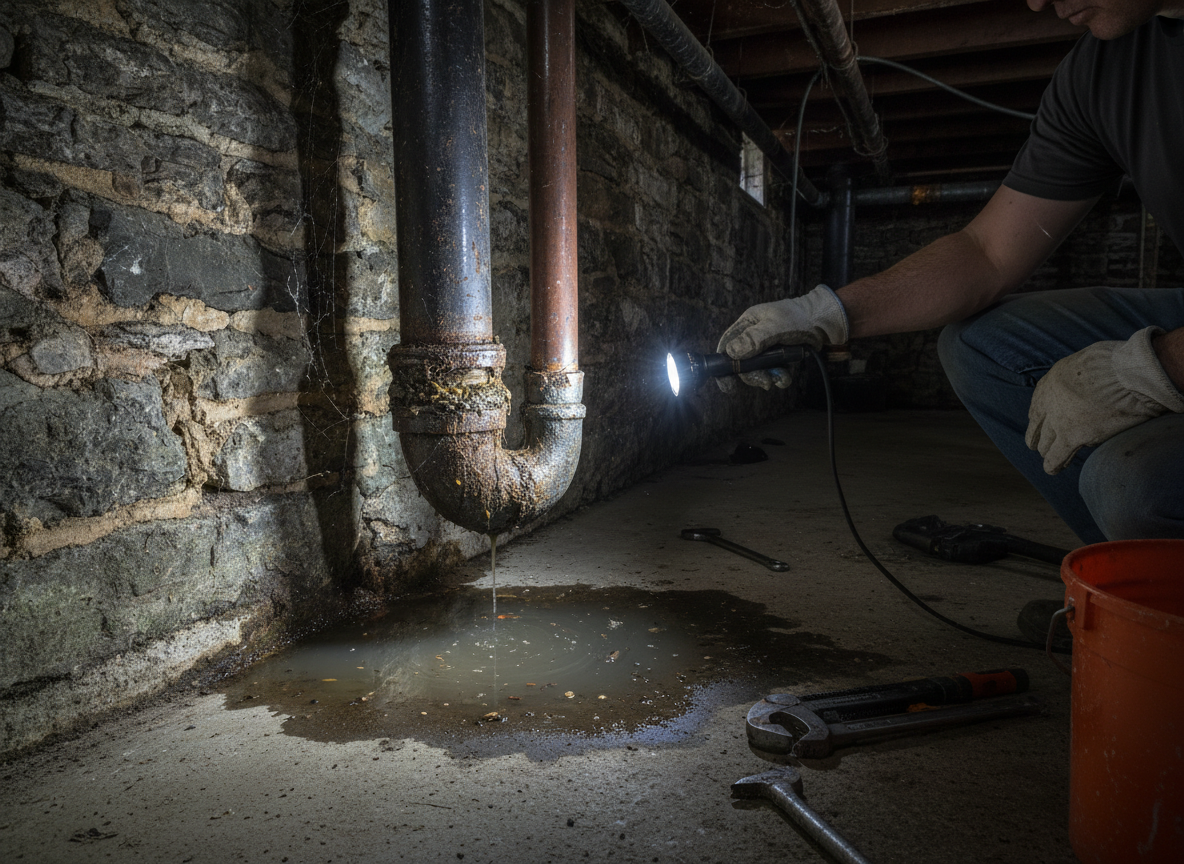
In Lawrence multifamily buildings with shared stacks, a clog in one unit's drain line backs up into another because the single vertical pipe serves every floor above the blockage, sending wastewater into the nearest available outlet. Older triple-deckers and mill-era apartments common in Downtown Lawrence and the Mill District often share 4-inch cast-iron or PVC stacks that run through multiple kitchens and baths, so a restriction at the base immediately affects upper floors.
How Shared Stacks Function in Multifamily Buildings
A shared stack is a vertical drain line that collects wastewater from fixtures on several floors before it joins the building sewer. In buildings constructed before 1950 across Tower Hill and Prospect Hill, these stacks were typically 3- or 4-inch cast iron with oakum and lead joints that settle and crack over decades. When a clog forms below the lowest connected unit, pressure builds and water seeks the path of least resistance through any open trap on higher floors. Cold winters in Essex County's humid continental climate accelerate the problem because ground heave around foundations can shift the stack base or cause partial collapses at the cleanout. Residents in Andover and Methuen side-by-side properties see the same pattern when older multifamily conversions reuse the original vertical runs without adding individual vents.
Why One Unit's Clog Travels Upward
Wastewater follows gravity until the stack is obstructed. A partial blockage from grease, wipes, or scale at the first-floor level forces the flow to rise and exit through second- or third-floor traps that are still open. In Prospect Hill apartments, this often appears first in the lowest unit's toilet or tub because that fixture sits closest to the restriction. Hydro jetting through the roof vent can clear the line without excavation, but repeated backups signal that the stack itself has offset joints or root intrusion common in Lawrence's clay-heavy soils. Linking to drain cleaning services helps owners understand when camera inspection is needed before the next freeze-thaw cycle stresses the pipe further.
Local Housing Stock and Seasonal Factors in Lawrence
Many multifamily structures in the Mill District and Downtown Lawrence date to the 1890s-1920s and retain original 3-inch stacks that were never sized for modern high-flow fixtures. Winter temperatures dropping below freezing cause condensate and grease to solidify faster inside uninsulated stacks that run along exterior walls. This seasonal narrowing turns minor restrictions into full blockages by January. Nearby Andover conversions face similar issues when landlords add units without upgrading the main stack. Professional camera location of the clog followed by targeted hydro jetting restores flow without removing walls, and the same footage reveals whether the stack needs replacement before spring thaws increase groundwater pressure on the sewer lateral.
Practical Steps When Backups Cross Units
Document which fixtures back up first and note the time of day, since morning showers and evening dishwashing create peak loads that expose partial clogs. Avoid chemical drain cleaners that can damage older cast-iron joints still found in Tower Hill buildings. Call a plumber who can access the roof vent or basement cleanout to clear the entire stack in one pass. In severe cases, excavation services become necessary when the stack base has collapsed under the foundation slab. Linking to the Massachusetts plumbing code article shows why current venting requirements prevent exactly these cross-unit events in newer work, while older Lawrence stock often lacks those safeguards.
When to Inspect the Full Stack
Recurring backups after a single-unit clearing indicate the restriction sits deeper in the shared line. A licensed plumber using a camera can map the stack from the roof down to the sewer connection, identifying offsets at each floor that trap debris. In South Lawrence East conversions, this inspection often reveals that the original 4-inch line now serves six or more units instead of the two it was designed for. Scheduling annual hydro jetting before winter reduces the chance of a January backup that affects every tenant above the clog. The address at 45 Beacon Ave serves as the base for 24-hour response when these shared-stack events occur across Essex County.