2026-08-31 · Marco Aroso
Hydro Jetting or Cabling: Which One a Drain Actually Needs
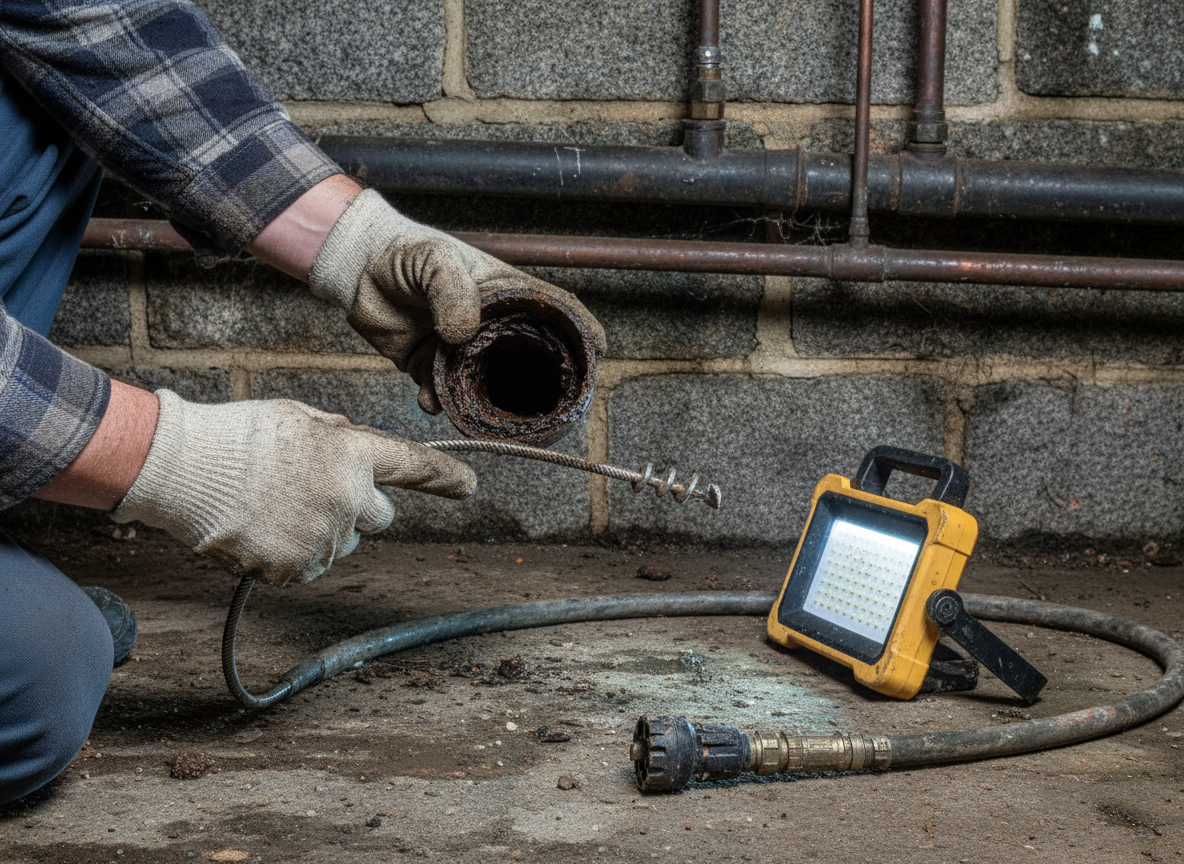
Cabling clears most simple clogs in Lawrence drains while hydro jetting is required once grease, scale, or roots coat the pipe walls. In Essex County homes built before 1950, especially those in Tower Hill and Prospect Hill, winter freezes often push minor debris into full blockages that cabling alone cannot fully restore.
How Each Method Works on Local Pipes
Cabling uses a flexible steel cable with a cutting head or auger that breaks through the clog and pulls material back toward the cleanout. This method works well on hair, paper, and small objects that lodge at bends or joints common in the cast-iron lines found under Downtown Lawrence and Mill District properties. Hydro jetting sends high-pressure water through specialized nozzles that scour the entire pipe circumference, removing years of buildup without digging. The two approaches differ in reach: cabling stops at the obstruction while hydro jetting travels the full length of the line and leaves the interior smooth. Local plumbers see cabling finish most kitchen sink calls in under an hour, whereas hydro jetting takes longer but prevents repeat visits within the same season.
When Cabling Solves the Problem
Cabling is the first step for recent, localized clogs caused by soap scum or foreign objects in bathroom drains. In Prospect Hill homes with narrow 3-inch laterals, the cable reaches the stoppage quickly through an existing cleanout and restores flow without additional equipment. Cold winter temperatures make pipes more brittle, so cabling avoids the risk of cracking older clay or cast-iron sections that hydro jetting pressure might stress. Homeowners notice gurgling at fixtures or slow drainage in one area only; these signs point to a single blockage rather than wall coating. After cabling, the line usually flows for months until new debris collects at the same spot.
When Hydro Jetting Is Required
Hydro jetting becomes necessary once grease from restaurant kitchens or heavy root intrusion lines the pipe walls, conditions frequent along tree-lined streets in Tower Hill and near Lawrence Heritage State Park. A cable may punch a hole through the mass, yet the remaining film reforms within weeks, especially after heavy spring rains raise groundwater. The 4,000-psi jets cut through 1/4-inch root mats and emulsify cooking grease that cabling simply pushes aside. Properties in nearby Methuen and Andover with shared sewer laterals often need this full cleaning after one home reports backups. Hydro Jetting restores the original diameter so wastewater moves at design speed again.
Local Conditions That Influence the Choice
Lawrence’s humid continental winters freeze shallow lines and expand soil around older foundations, shifting joints that then collect roots. The article Tree Roots in the Sewer Line: How They Get In and What Actually Stops Them explains how maples common in South Lawrence East send roots into cracks every 8–12 years. Cabling cuts the current intrusion but leaves hairline openings; hydro jetting followed by a camera inspection reveals whether the lateral needs Sewer Line Repair and Replacement. Grease traps in Downtown Lawrence restaurants also demand periodic hydro jetting because cabling cannot remove the hardened layer that builds on vertical stacks. Drain Cleaning crews keep both tools on the truck at 45 Beacon Ave and respond 24 hours because winter mornings produce the highest call volume.
Deciding for Your Drain
Start with a camera inspection through the cleanout to see whether the clog is a single plug or wall-to-wall buildup. If the camera shows only a localized mass and the rest of the pipe is clear, cabling restores service fastest. When the footage reveals coating thicker than 1/8 inch or multiple root entry points, schedule hydro jetting to avoid repeat service calls. Owners in Arlington District and North Common who combine both steps—cable first, jet second—report the longest intervals between visits. The decision rests on pipe condition, not price alone, because an incomplete cleaning costs more over time in callbacks.