2026-08-31 · Marco Aroso
Frozen and Burst Pipes in Unheated Basements: Where They Split and Why
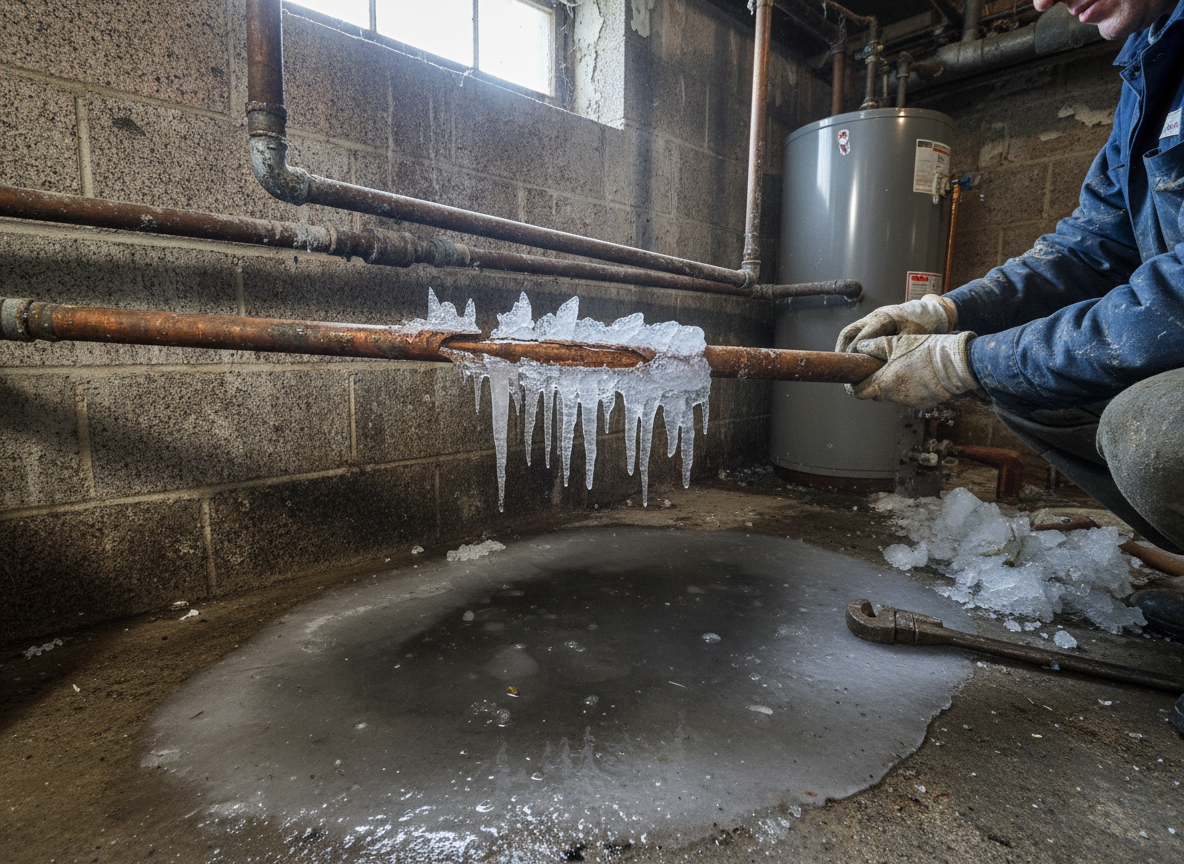
Pipes in unheated basements split most often at threaded joints, 90-degree elbows, and straight runs against exterior walls once temperatures stay below 20°F for several hours. In Lawrence’s humid continental climate, winter nights routinely drop into the teens, and homes in Tower Hill and Prospect Hill with stone or early concrete foundations lose heat fastest through the floor slab and rim joists. Water expands roughly 9% when it freezes, pushing outward until the weakest point gives way, usually where pipe movement is restricted or where older galvanized or copper sections have thinned from years of corrosion.
Where Pipes Fail Most Often in Local Basements
Unheated basements in Essex County homes built before 1960 commonly show splits at three locations. Threaded galvanized joints corrode from the inside and lose wall thickness, so the first ice expansion cracks the fitting rather than the pipe itself. Ninety-degree elbows restrict water flow and create turbulence that leaves sediment against the wall; when freezing begins, pressure concentrates there. Straight runs pinned against north-facing foundation walls lose heat quickest because cold air infiltrates through the sill plate and any gaps around utility penetrations. In homes near the Merrimack River, higher groundwater keeps the slab colder longer, extending the window when pipes remain at risk even after daytime temperatures rise.
How Lawrence Winters and Housing Stock Interact
Lawrence experiences repeated freeze-thaw cycles each winter, with nights below 15°F common from December through February. Older three-decker and mill-worker homes in Downtown Lawrence and the Mill District often have uninsulated rim joists and minimal foundation insulation, allowing cold air to pool at floor level. These houses frequently retain original galvanized or early copper supply lines that have already lost 30-40% of original wall thickness. When a cold front stalls over the Merrimack Valley for three or more nights, the combination of thin pipe walls, restricted movement, and sustained sub-freezing air produces predictable failures at the same spots year after year. Nearby Andover and Methuen see similar patterns, but Lawrence’s denser stock of pre-war buildings increases the frequency of basement bursts.
Why Joints and Elbows Split Before Straight Pipe
Ice forms first where water is slowest to move and where metal has already been stressed. Threaded joints create a natural weak line because the threads reduce wall thickness and the fitting material is often a different alloy that expands at a different rate. Elbows force water to change direction, so sediment settles and creates an insulating layer that keeps the pipe wall colder than surrounding sections. Straight runs against exterior walls fail when the pipe is clamped tightly and cannot expand lengthwise; pressure builds until the seam or a corrosion pit opens. Leak detection crews in Lawrence routinely find the first water stain directly below these three locations after a January cold snap.
Practical Steps for Older Lawrence Homes
Homeowners can reduce risk by keeping basement doors open to allow warm air from the first floor to circulate, or by installing a small thermostatically controlled heater set at 50°F near the coldest wall. Insulating the rim joist with rigid foam and sealing utility penetrations cuts heat loss at the most vulnerable plane. Replacing long runs of galvanized pipe with PEX during other plumbing work removes the threaded joints that fail first. When a burst does occur, calling an emergency plumber quickly limits water damage to finished areas above. For homes with original sewer lines, reviewing what lies under older streets helps owners plan full-system upgrades rather than repeated spot repairs after each winter freeze.